Coming soon
Exploration and dungeon-view captures will go here.
In-development first-person dungeon crawler
A first-person dungeon crawler about pushing too far into places that push back.
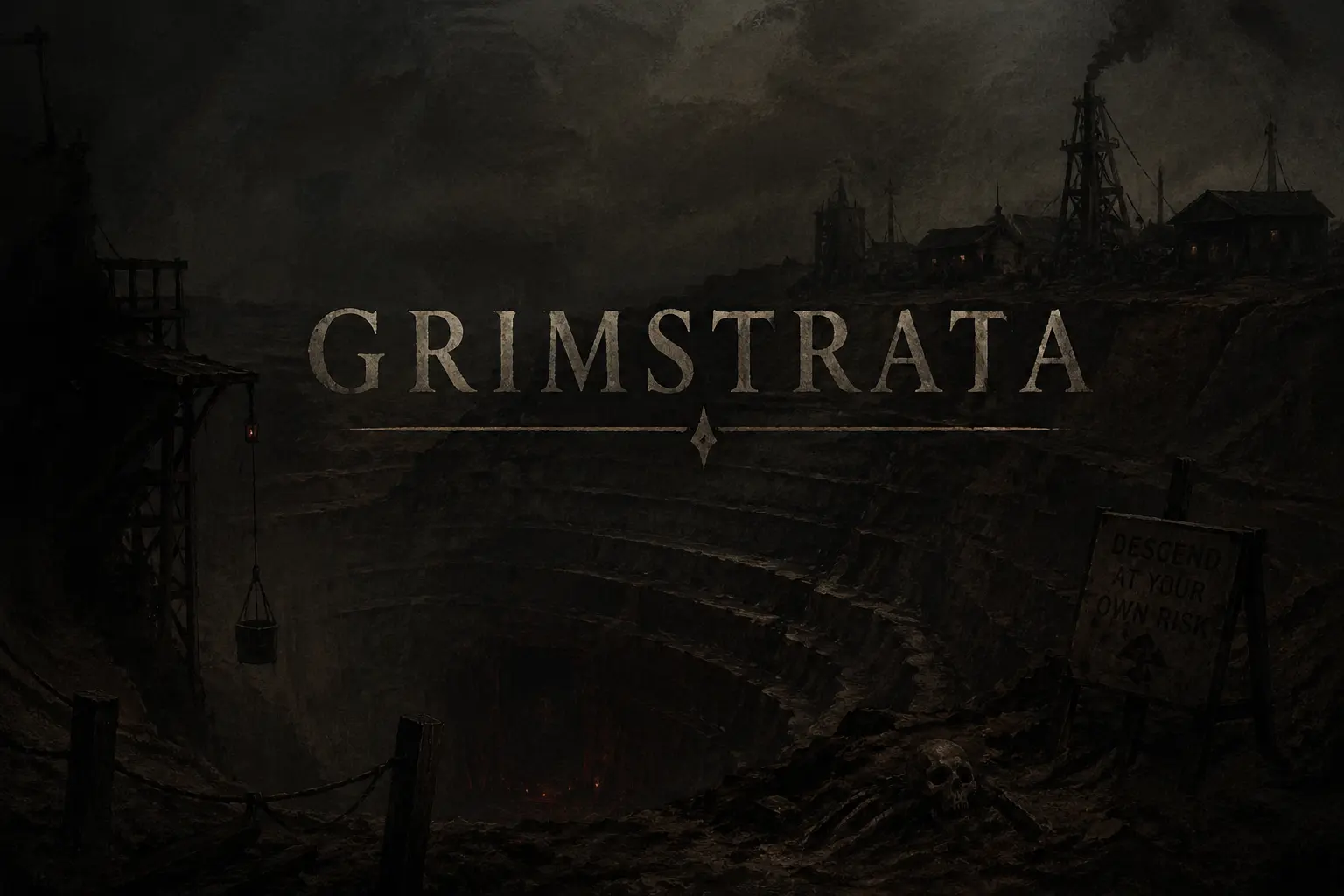
Grimstrata is an in-development first-person dungeon crawler built in MonoGame. It started as a classic grid-based dungeon experiment and has grown into something stranger: a haunted, system-heavy crawl through corrupted sectors, terminal interfaces, tactical encounters, interactable dungeon machinery, and a growing expedition loop.
The game is still early, messy in places, and actively changing. But the core is finally taking shape: explore the dungeon, read the environment, trigger encounters, survive combat, recover rewards, interact with terminals and shrines, and decide how far you are willing to push before returning to safety.
What is Grimstrata?
Grimstrata is a first-person dungeon crawler where exploration, combat, terminals, strange dungeon machinery, and RPG progression are being built into a run-based expedition loop.
The player enters unstable sectors, explores room by room, finds objects and events, fights anomalies, recovers resources, and decides when to press forward or get out.
A lot of the recent work has focused on turning isolated systems into an actual loop. The dungeon renderer, exploration screen, combat flow, interactable objects, terminal UI, procedural generation, decoration passes, combat presentation, rewards, victory flow, and event foundations have all been getting rebuilt or refined.
This is not a finished game yet. Some screens are still being polished. Some systems are still rough. Some features exist as foundations rather than finished content. But Grimstrata is no longer just a renderer or a prototype. The pieces are starting to behave like a real dungeon expedition.
I am holding this space for real captures from the current build instead of dressing the page up with fake screens.
Exploration and dungeon-view captures will go here.
HUD and sector pressure screenshots will go here.
Dungeon object interaction screenshots will go here.
Combat encounter screenshots will go here.
Terminal interface screenshots will go here.
Atlas and map screenshots will go here.
Victory and reward flow screenshots will go here.
Hacking flow screenshots will go here.
Decoration-heavy dungeon screenshots will go here.
Exploration is built around a first-person, grid-based dungeon view. The player moves through sectors one step at a time, turns through corridors, discovers rooms, interacts with objects, and can be pulled into combat when anomalies or monster groups are encountered.
The renderer supports a 3D dungeon view with textured floors, walls, ceilings, doors, stairs, fog, environmental overlays, corruption layers, mist, fire, water, shadow fields, prop rendering, floating monster anchors, vignette, threat glow, dust motes, flicker, echo pulses, and distortion effects.
Combat is being tightened into a better part of the expedition loop. Encounters can trigger from exploration, flash the screen, and transition into battle. The next goal is to make combat feel more connected to the dungeon rather than like a separate screen.
The terminal is becoming Grimstrata's in-game command center. It currently supports inventory, cortex, archive, directives, and atlas views, giving the game a place for lore, objectives, maps, collected data, and progression systems.
Grimstrata uses procedural dungeon generation as a foundation, but the goal is not random maze soup. The generator builds BSP-style layouts with rooms, corridors, and doors, then other systems layer meaning, decoration, encounters, and interactables on top.
Dungeons are being built around more than empty corridors. Grimstrata supports terminals, shrines, salvage caches, lockers, switches, blocks, doors, and tether points so the player makes decisions instead of simply walking forward.
The decoration system is moving toward data-driven dungeon dressing. Decoration passes can place vignettes, lights, scatter, and decals based on spatial tags, asset tags, room context, wall adjacency, spacing, and placement rules.
Special Events are planned as authored dungeon moments: lore interactions, boss encounters, puzzles, cutscenes, rewards, shrine events, and room-based surprises. Procedural spaces need punctuation. Some rooms should matter.
The big design focus now is the expedition loop: enter a sector, explore, find strange objects, trigger events, fight, recover rewards, make progress, and decide when to return. The more the player takes, hacks, opens, or disturbs, the more dangerous the sector can become.
Why build it this way?
Grimstrata is the kind of game that benefits from being shaped while it is playable. The core systems are still evolving, and I want the game to grow through real runs, real feedback, and real friction instead of polishing the wrong things in isolation.
The goal is not to pretend the game is finished. The goal is to show what exists, be honest about what is rough, and keep building toward a stronger dungeon crawler one system at a time.
The next big direction is making expeditions feel like complete runs. I want the player to enter a sector, make decisions, take risks, find strange things, fight through danger, recover meaningful rewards, and decide whether to keep pushing or return to safety.
Long term, Grimstrata should feel like a dungeon crawler where the dungeon is not passive. The deeper you go and the more you disturb, the more the sector reacts.
Grimstrata has changed a lot since the first prototype. It is still rough, but the shape is finally visible. I am not trying to make a giant studio RPG. I am trying to build a dungeon crawler with teeth: readable systems, strange atmosphere, tactical risk, and enough weirdness that every expedition feels like it might have found something it should not have.